
Overview
Introduction
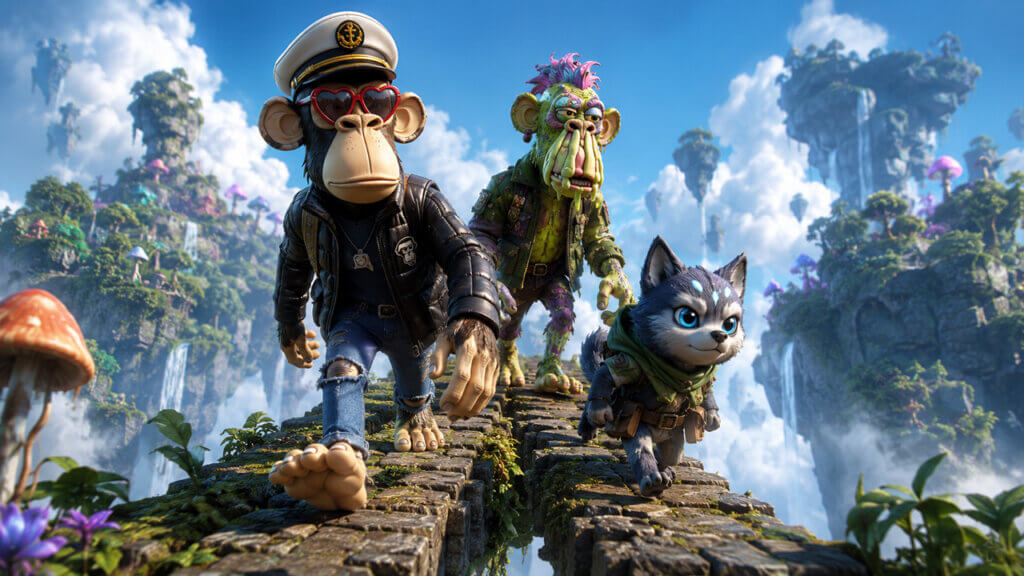
The Otherside metaverse is Yuga Labs' virtual world for social play, NFT assets, creator-built spaces, and ApeCoin-linked ownership.
Yuga Labs built Otherside as a crypto-native platform where social spaces, playable avatars, user-created games, and blockchain-linked assets share one environment. The hub, Koda Nexus, went live in November 2025 and is accessible through a browser, so you don't need to own a Bored Ape or buy an Otherdeed just to look around.
The world has four main layers: a browser-accessible hub, NFT-linked land and characters, creator tools for building games and objects, and an onchain economy tied to Ethereum, ApeCoin, and ApeChain.
Key Takeaways
- What it is. Otherside is Yuga Labs' crypto-native metaverse for social hubs, game modes, user-created worlds, NFT assets, and ApeCoin-linked activity.
- What it changes. Users can enter some experiences through a browser while NFT holders, creators, and wallet-connected users get deeper ownership and asset features.
- Main risk or limitation. Otherside still needs repeatable gameplay, safe wallet flows, active creators, and real demand beyond Yuga's existing NFT community.
What Is the Otherside Metaverse?
Otherside is a crypto-native virtual world built by Yuga Labs, the company behind Bored Ape Yacht Club. It launched its central hub, Koda Nexus, in November 2025. Users can explore social spaces, play creator-built games, and own in-world assets as NFTs on the Ethereum blockchain and ApeChain.
The world has four components:
- Koda Nexus is the main social hub, accessible through a browser without any purchase required.
- Otherdeeds are land NFTs representing plots in the world, each with traits that connect to game mechanics.
- Kodas are Otherside's native playable characters, tied to its lore and utility systems.
- ApeCoin and ApeChain are the token and blockchain infrastructure powering the Ape ecosystem economy.
Otherside differs from traditional video games because assets, including land, characters, and items, are owned by users as blockchain-based NFTs. They can be sold, transferred, or used as collateral outside the game itself.
Basic access is free. Deeper features, including land ownership, avatar use, and creator tools, require a connected crypto wallet and, in some cases, specific NFTs.
Yuga Labs developed Otherside as the gameplay and social layer for its existing NFT ecosystem, connecting brands including BAYC, MAYC, and Bored Ape Kennel Club into one environment.
How the Otherside Metaverse Fits Into Yuga Labs, BAYC, and ApeCoin
Otherside sits inside Yuga Labs' ecosystem, which began with Bored Ape Yacht Club and expanded into connected NFT brands, games, and token infrastructure. Understanding who built what, and why, helps clarify the difference between entering a hub, buying land, and holding a token.
The Yuga Labs and Otherside Connection
Yuga Labs launched Bored Ape Yacht Club in April 2021 and later expanded into related collections and experiences. Yuga now groups Otherside alongside BAYC, Mutant Ape Yacht Club, Bored Ape Kennel Club, ApeChain, and creator tooling. It has also shifted its portfolio over time: CryptoPunks and Meebits were once part of its NFT footprint, but Otherside is built around the idea that NFT identity, playable avatars, social worlds, and user-created objects can all sit inside one environment.
BAYC's Role in the Otherside World
Bored Ape Yacht Club gave Otherside its early audience and cultural framing. A user who already holds a Bored Ape, Mutant Ape, or related Yuga asset may see Otherside as the place where that identity becomes playable, social, or commercially useful, rather than just a profile picture sitting in a wallet.
That audience history ties directly to Otherside's design: the world leans on existing Yuga brand recognition to attract early users. Whether it can retain users who don't already own a Yuga NFT is one of the project's central open questions.
Where ApeCoin Fits
ApeCoin is the governance and utility token associated with the Ape ecosystem, and ApeCoin DAO is the community that governs it. In Otherside, ApeCoin is best understood as the economic and governance-adjacent layer, not as an entry fee. Three things are easy to confuse but worth keeping separate:
- Yuga Labs builds and stewards the Otherside product.
- BAYC supplies the world's identity framework and initial audience.
- ApeCoin connects to utility, governance, and the ApeChain economy.
Buying ApeCoin, buying an Otherdeed, and entering Koda Nexus are related actions, but they carry different risk profiles and serve different purposes. Conflating them is one of the most common ways beginners overspend before they understand what they're actually buying.
From Otherdeeds to Koda Nexus: What Users Can Access Now
Users can access more of Otherside today than during its early test years. The project has moved from land NFTs and invite-only tests toward a browser-accessible hub, but full ownership and creator features still require wallets, specific NFTs, and future rollouts.
The 2022 Land Sale and Test Trips
Otherside entered public awareness through Otherdeeds, the NFT assets tied to land plots in the world. Yuga sold these in 2022, then ran large-scale tests called First Trip and Second Trip to demonstrate social presence, crowd scale, and early gameplay concepts.
Those tests created expectations before any persistent public world existed. The gap between hype and delivery shapes how skeptically the project is still viewed today.
The current situation is more grounded. Koda Nexus is live, the world has an entry point, and the broader creator economy is still being built out.
Koda Nexus as the Current Hub
Koda Nexus opened on November 12, 2025 as the central social experience for Otherside. It offers browser access and room to expand through new locations, game modes, and creator-built experiences. New users have a live place to explore and evaluate the world before committing to any purchase.
The Nexus also shifts Otherside's framing. Basic entry through a browser or email account is possible without owning anything. Wallet-connected users and NFT holders unlock asset features. That lower barrier matters, but it doesn't erase the blockchain-related risks that appear once wallets and assets are involved.
Email Access vs. NFT-Holder Access
What you can do in Otherside depends on how you access it. Entry, land ownership, avatar use, and creation are four different layers, and they don't all require the same things.
| Access Path | What It Lets Users Do |
|---|---|
| Browser or email account | Try supported public spaces and social features without starting from an NFT purchase. |
| Wallet-connected account | Connect eligible assets, manage onchain items, and interact with ownership features. |
| Otherdeed holder | Link land-related assets and access holder-specific mechanics as they become available. |
| Creator or developer | Build objects, games, or spaces through Otherside creator tooling where available. |
The lowest-risk starting point is to explore without buying anything. Users who later decide they want asset ownership should verify all links through official channels, and should not assume that buying a land deed delivers a finished game experience.
How the Otherside Metaverse Works
Otherside combines a social hub, land-linked NFTs, playable characters, resource systems, creator tools, and a marketplace layer into one world economy. For any of it to hold long-term value, those pieces need to feel useful inside actual gameplay, not just on secondary markets.
Otherside Land, Regions, and Resources
Otherdeeds represent land plots in Otherside. Each deed can carry traits such as environment type, sediment, resources, artifacts, or Koda-related attributes. The world includes five named regions:
- Biogenic Swamp
- Chemical Goo
- Rainbow Atmos
- Cosmic Dream
- Infinite Expanse
Resources are intended to feed creation and utility loops inside the world. A plot's scarcity alone doesn't make it useful. Land becomes meaningful only when resources, crafting mechanics, access privileges, or in-world experiences give ownership a real function inside the game itself.
Otherside Avatars, Kodas, and Playable NFTs
Avatars turn wallet ownership into in-world presence. BAYC, MAYC, Kodas, Kodamaras, and other supported assets can shape how a user appears, plays, or participates. Kodas matter most here because they're native to Otherside's lore, not imported from an earlier collection.
Each asset type serves a different role:
| Element | What It Does In Otherside |
|---|---|
| Otherdeed | Represents a land-linked NFT asset with traits that can connect to world mechanics. |
| Koda | Acts as a native character and lore asset tied to rare land and future utility. |
| Voyager | Names a participant in the Otherside journey and community experience. |
| Resources | Feed future crafting, manufacturing, trading, or gameplay loops. |
| ODK | Gives creators tools for building interoperable objects and experiences. |
| Agora | Points toward a marketplace layer for buying, selling, and trading world assets. |
None of these assets carry finished utility on day one. Their value depends on whether they become integrated into repeatable activities, creator-driven economies, and social spaces that users return to by choice.
Otherside Creator Tools and Manufacturing
Creator tools are what make Otherside comparable to platforms like Roblox, Fortnite Creative, or Minecraft-style worlds, where users generate much of the content. The Otherside Development Kit (ODK) helps builders create objects and experiences that work across the platform.
Manufacturing turns templates and resources into world objects. The process includes optimization, moderation, resourcing, and imbuing, so the creator economy has technical checks and safety rules rather than unlimited uploads.
Whether enough creators will build quality spaces, and whether users will return after novelty fades, remains one of the project's unanswered questions.
The Technology Behind Otherside's Multiplayer World
Otherside's technical pitch centers on scale. The goal is to put large numbers of users into the same virtual space without the world feeling empty, laggy, or split across instances. That's a harder problem than it sounds, and the infrastructure choices behind it matter for whether the world can actually deliver on it.
M2 and Morpheus
Yuga has worked with Improbable and its M2 infrastructure, including Morpheus technology, to support large shared spaces. The goal, as described in Otherside's litepaper, is thousands of Voyagers gathering in the same space across different devices. Technical demos have shown crowd scale, but a persistent world also needs content pacing, moderation, consistent performance on ordinary devices, and enough social density during regular hours, not just during launch events.
Otherside Crowd Audio and Real-Time Presence
Spatial audio is central to Otherside's social experience. A metaverse hub doesn't feel convincing if users can see avatars but can't communicate naturally, so Otherside's design includes spatial audio, distance effects, and real-time voice presence.
Open audio also creates pressure on moderation and safety. Chat, voice, and creator-built spaces all need rules, reporting tools, and active enforcement if the platform wants to reach people outside the core NFT community without exposing them to harassment or scams.
Otherside Browser Access and Device Limits
Browser access lowers the barrier for users who don't own high-end gaming hardware or don't want to install a full client. That matters for reaching people beyond existing NFT holders. The tradeoff is that a browser login is low-friction, while asset ownership brings wallet approvals, marketplace decisions, and bridge transactions into the same flow. Those two experiences carry very different risk levels, and the path from one to the other should be deliberate.
Ownership, Wallets, and the Onchain Economy in the Otherside Metaverse
Ownership in Otherside centers on NFTs, wallet-connected items, ApeCoin, ApeChain, and secondary-market activity. The most important thing to understand before going further is that trying the world and speculating on assets in it are two separate decisions with two separate risk profiles.
Otherdeeds and Ethereum NFTs
Otherdeeds and most Yuga-linked assets originated as Ethereum NFTs. That makes wallet compatibility, contract verification, approval management, and secondary-market due diligence relevant for anyone buying land or connecting a collection. Wallet setup and safety come before any asset purchase.
ApeCoin and ApeChain
ApeCoin is tied to the Ape ecosystem as a governance and utility token. ApeChain adds a newer blockchain layer built for Ape-native applications, with APE as the native gas token on an Arbitrum Orbit chain. Users who want ApeCoin for Otherside activity can find it on crypto exchanges, depending on region and availability. Holding APE, holding land, and entering the public hub are three separate actions. Understanding why you need a token before acquiring it is the right order of operations.
Marketplace Activity and Live Values
Marketplace activity in Otherside can cover land, avatars, items, badges, resources, and future world objects. Live values change fast. Price, floor, volume, and supply data should be checked on current market pages or official marketplace links before any buy, sell, or bridge action.
Safety Checks Before Buying or Connecting a Wallet to the Otherside Metaverse
Wallet safety is central to using Otherside. Fake mint links, copied collections, and impersonation scams are common in NFT communities, and a single wrong approval can result in asset loss. Verifying the route before connecting a wallet or approving any transaction is not optional.
Verify Official Links First
All official links should be confirmed through known Yuga, Otherside, ApeCoin, ApeChain, and marketplace sources before interacting with any mint, claim, bridge, or marketplace page. The Otherside FAQ flags fake giveaways, fake support accounts, and seed-phrase requests as active scam patterns.
Before connecting a wallet anywhere in the Otherside ecosystem, run through this checklist:
- Start from official domains, not search ads or DMs.
- Verify Discord, X, and marketplace links before connecting.
- Check the contract address, collection name, and URL spelling.
- Review token and NFT approvals after connecting, and revoke anything you don't recognize.
- Stop immediately if a site asks for a seed phrase.
Never Share a Seed Phrase
A seed phrase is the recovery key to an entire wallet. It is not a login detail, a verification step, or a support requirement. No legitimate mint page, marketplace, game hub, or support account needs it. Any request for seed words should be treated as a theft attempt, not a technical step. Self-custodial wallets give asset ownership portability, but they also move all responsibility for security to the user.
Check the Asset Before You Buy
Before buying an Otherdeed, Koda, avatar, or related item, confirm that the asset belongs to the intended collection and that the marketplace you're using is legitimate. Crypto wallet safety applies directly here because Otherside combines entertainment with assets that can be moved, sold, or approved onchain. That combination makes phishing more expensive than a standard game-account compromise, where the worst case is usually a lost username.
Otherside Compared With Other Virtual Worlds
Otherside is positioned near Decentraland and The Sandbox in the crypto metaverse space, but its design goals, NFT ecosystem, and technology stack put it in its own category. Understanding those differences helps set realistic expectations, especially if you've already used other blockchain virtual worlds or mainstream creator platforms.
The comparison below focuses on design differences.
| Comparison Point | How Otherside Differs |
|---|---|
| Decentraland And The Sandbox | Otherside is more tightly tied to Yuga's NFT brands, Kodas, Otherdeeds, ApeCoin, and a staged hub launch. |
| Roblox And Fortnite Creative | Otherside borrows creator-world logic but adds blockchain assets, wallets, and tradable ownership. |
| Minecraft-Style Worlds | Otherside emphasizes shared lore, NFT-linked resources, and platform tools instead of pure sandbox building. |
| Traditional MMOs | Otherside uses persistent social spaces and avatars, but asset ownership and creator economies are more crypto-native. |
The core test is whether Otherside can make crypto ownership feel useful inside a social world that people would still visit without a speculative incentive.
What Still Needs to Be Proven
Koda Nexus being live is progress, but it's not the same as Otherside being a durable game world. The project still needs to demonstrate retention, creator quality, and utility that reaches beyond existing NFT holders. These are product problems as much as market problems.
The concrete questions still open are:
- Can Koda Nexus keep non-NFT users engaged after launch curiosity fades?
- Can the ODK attract enough creators to produce genuinely good games and spaces?
- Can Otherdeeds and resources gain in-world utility without becoming confusing to use?
- Can ApeCoin and ApeChain support real activity without making basic access feel financialized?
- Can moderation handle voice, chat, user-built worlds, and branded spaces at scale?
- Can the world run reliably on mid-range and mobile devices?
The gaming crypto category shows how many projects compete for the same attention, and asset listings don't prove retention, gameplay quality, or creator depth. The biggest risk Otherside faces is that owning things in the world becomes more interesting than actually being in it.
FAQs
Is the Otherside metaverse live now?
Yes. Koda Nexus opened on November 12, 2025 as the active social hub for Otherside. It’s browser-accessible and includes wallet-connected features. The broader world, including creator spaces and full asset utility, is still being developed beyond the hub.
Do you need an NFT to enter the Otherside metaverse?
No. Basic Koda Nexus access through a browser or email account doesn’t require owning a Bored Ape or Otherdeed. NFT holders can access deeper asset-linked features, but buying an NFT is not the starting point for everyone.
What is the current hub for Otherside?
Koda Nexus is the central social hub for Otherside. It’s the entry point for exploring the world, meeting other users, accessing game experiences, and connecting eligible assets.
What are land NFTs in the Otherside metaverse?
Otherdeeds are NFT assets tied to land plots in Otherside. Each deed can carry traits such as environment type, sediment, resources, artifacts, or Koda-related attributes that may affect world mechanics as they roll out.
Is ApeCoin required for entry into the Otherside metaverse?
No. ApeCoin is not required for basic entry into Otherside. It’s tied to the Ape ecosystem and ApeChain economy. Users who need a place to research or access it can look at exchanges for beginners once they understand why they need the token.
Is Otherside like other metaverse platforms?
Partly, but the differences matter. Otherside is more closely tied to Yuga Labs, BAYC, Otherdeeds, Kodas, ApeCoin, and ApeChain than platforms like Decentraland or The Sandbox. Those projects have different histories, creator systems, and token ecosystems.
