

Will Bitcoin hit $150k before 2027?
Current Odds
Odds Summary
by December 31, 2027 leads at 33% reported probability on Polymarket.
Polymarket · Last synced
Market Analysis
Bitcoin’s $150K hurdle tests time, liquidity, and wick risk
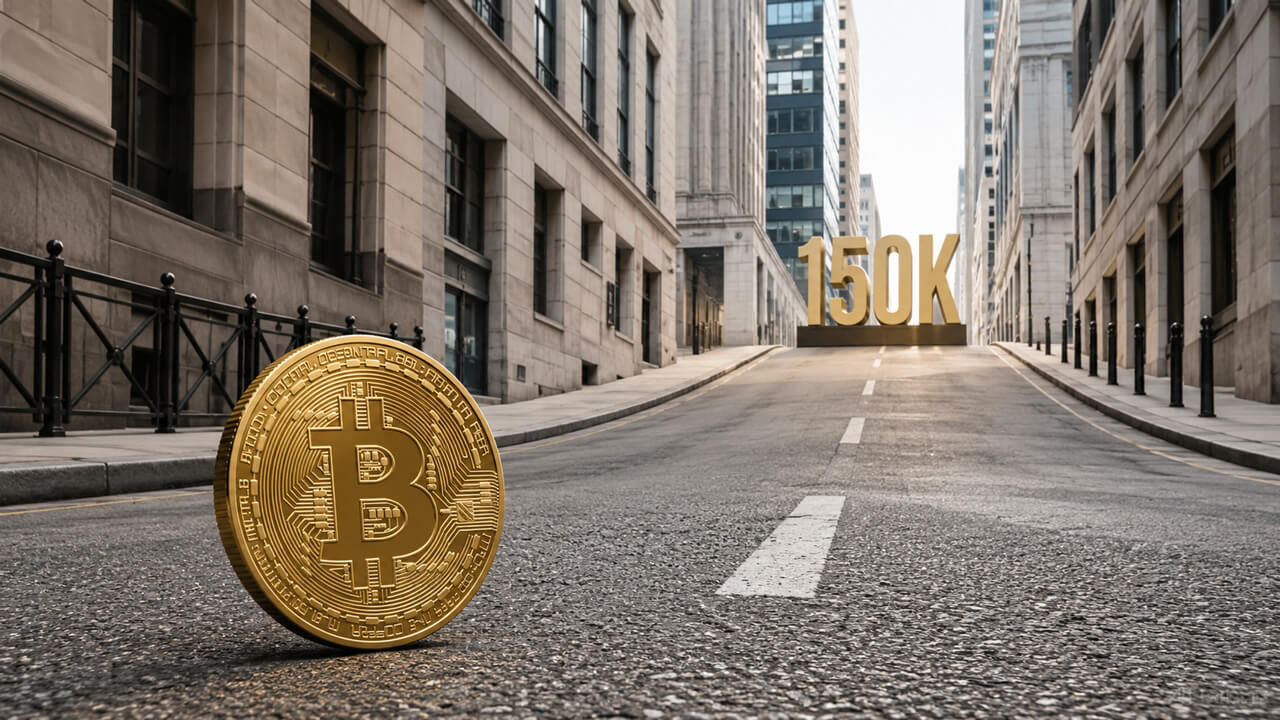
A tiny Yes price can coexist with a highly volatile asset because the contract asks for a specific print on Binance before the calendar closes. The debate turns on whether Bitcoin can produce an acceleration phase large enough to overwhelm profit-taking and deadline decay.

The market is treating a Bitcoin move to $150,000 before 2027 as a low-probability path because the contract demands a specific, verifiable Binance BTC/USDT print within a fixed window. The key inference from the 4.3% Yes price is that participants are pricing the target as a tail event requiring acceleration, favorable liquidity, and a late-cycle burst large enough to reach the threshold even for one minute.
The price is rejecting a smooth climb to $150,000
The Polymarket contract has meaningful activity, with $2.6 million in volume, $126,060 in liquidity, $208,570 in open interest, and 286 traders. That depth matters because the price is less likely to be a casual placeholder and more likely to encode a shared view: a gradual bullish path alone may fail to hit the exact high needed before the deadline.
The Yes side benefits from the rule that any Binance one-minute candle with a final High price at or above $150,000 resolves the market to Yes. A close, average, or sustained level is unnecessary. Because the market still assigns only 4.3% to Yes, the implied story is severe: even a temporary wick is being treated as difficult without a major demand shock or a sharp volatility regime change.
The hidden assumption is that time decay beats volatility
The close date, January 1, 2027 at 5:00 AM UTC, gives Bitcoin a defined runway. Every week that passes without a major move raises the required pace of appreciation and reduces the number of opportunities for a liquidation-driven spike. This is why the calendar is central to the price. The market can respect Bitcoin’s capacity for sharp moves while still assigning heavy weight to the deadline.
The No-heavy pricing also implies an assumption about supply absorption. A $150,000 print would likely require enough demand to push through profit-taking, hedging, and liquidity resting above prior trading ranges. Since the contract needs a Binance high instead of a broad index level, thin order-book moments could help Yes, but the market is signaling that such a wick needs a larger setup than ordinary volatility.
The Binance high rule keeps a narrow path alive
Resolution depends on Binance BTC/USDT one-minute candle High prices. That detail matters because the market is about a venue-specific tradeable print, not a general narrative about Bitcoin adoption or a cross-exchange average. A brief Binance spike can settle the outcome, while a move that fails to register on that source does not satisfy the criteria.
This rule creates a tension inside the odds. A venue-specific high gives the Yes side optionality around intraday volatility, liquidations, and temporary order-book gaps. The same rule also limits arguments based on broader sentiment, since the settlement source must show the qualifying price. The 4.3% price can be read as assigning some value to wick risk while judging the required distance and timing as the dominant barriers.
Repricing would need evidence of acceleration, not enthusiasm
Because the target can be hit for one minute, the most relevant evidence would be data showing Bitcoin moving toward $150,000 with expanding intraday highs and less resistance at successive price bands. Headlines alone would matter only if they translated into Binance prints that shorten the distance to the threshold.
| Evidence type | Why it matters for this contract |
|---|---|
| Successive Binance highs closer to $150,000 | Reduces the amount of final acceleration needed before the deadline. |
| A hypothetical institutional or sovereign demand shock | Could change the market’s assumption about whether new demand can absorb sell pressure quickly. |
| A volatility expansion with large intraday candles | Raises the relevance of the one-minute High rule and wick-based resolution path. |
| Long stretches without higher highs | Increases calendar pressure and supports the view that time decay is winning. |
The strongest catalysts would be scenarios that affect both price level and speed. A hypothetical policy shift that opens new pools of capital, a major corporate treasury allocation, a sovereign accumulation announcement, or a macro liquidity shock could all force the market to revisit the low Yes probability if they produced immediate Binance price action. A purely narrative catalyst with no visible movement in the settlement data would have weaker impact because the rule is mechanical.
The main counter-signal is an orderly rally that lacks a blow-off phase
The cleanest failure mode for Yes is a constructive Bitcoin market that advances without the kind of convex move needed to tag $150,000. That matters because a bullish direction and a winning Yes outcome are separate claims under these rules. A rally can improve sentiment, volume, and participation while still leaving the final Binance high below the threshold when the clock expires.
The No side also has to live with tail risk. Since a single qualifying one-minute candle is enough, the outcome can change quickly if volatility clusters near the target late in 2026. That is why the market’s low Yes price should be read as a judgment about the full path to $150,000, including time, venue, and microstructure, instead of a simple statement about Bitcoin’s long-term prospects.
Sources
What Could Move the Odds?
Market-Implied Thesis
The 2.9% December 31 price implies Bitcoin is unlikely to reach $150,000 during the remaining 2026 window.
The relevant binary closes January 1, 2027, so the low price reflects a narrow time-to-threshold judgment rather than a long-run Bitcoin forecast.
What Could Reprice It
The October 27-28 FOMC meeting is the clearest dated event that could reset rate and liquidity expectations before resolution.
Federal Reserve policy communication can alter real-rate, dollar, and risk-appetite expectations quickly, making it the most direct scheduled macro repricing point.
Where the Market May Be Weak
Reported cumulative volume does not ensure deep current execution: listed liquidity is modest relative to the market’s attention and turnover.
A $104.65K liquidity figure beside $27.3M in volume suggests the displayed probability may be vulnerable to price moves from limited marginal trading rather than broad participation.
Counter-Signal
Persistent institutional demand could invalidate the low-probability thesis if ETF inflows and treasury buying tighten available Bitcoin supply.
U.S. spot Bitcoin ETFs recorded about $2.65B of September net inflows, while Strategy reported buying 334 BTC between September 28 and October 4.
Market Details
- Resolution criteria
- When will Bitcoin hit $150k
- Platform
-


- Category
- Crypto › Bitcoin
- Scheduled deadline
- January 1, 2027, 5:00 AM UTC
- Market rules summary
- Multi-timeframe Polymarket event. Each listed timeframe is represented by its Yes price on the underlying binary market. View full rules
Frequently Asked Questions
What are the current Will Bitcoin hit $150k before 2027 odds?
Polymarket reports Will Bitcoin hit $150k before 2027 odds with by December 31, 2027 at 33%, by September 30, 2027 at 16%, by June 30, 2027 at 13.5%, and by March 31, 2027 at 8.5%. These probabilities are market-implied and can change as liquidity and trading activity update. The latest market snapshot includes $27.3M volume, $101.08K liquidity, and $240.28K open interest. CryptoSlate last synced this market data at Oct 10, 2026, 11:42 UTC.
What could move the Will Bitcoin hit $150k before 2027 prediction market odds?
The 2.9% December 31 price implies Bitcoin is unlikely to reach $150,000 during the remaining 2026 window. The relevant binary closes January 1, 2027, so the low price reflects a narrow time-to-threshold judgment rather than a long-run Bitcoin forecast. Catalysts to watch include October 27-28 FOMC meeting, FOMC meeting, October 27-28, 2026, and New large orders or macro headlines.
How does the Will Bitcoin hit $150k before 2027 prediction market resolve?
When will Bitcoin hit $150k Multi-timeframe Polymarket event. Each listed timeframe is represented by its Yes price on the underlying binary market.
Related Bitcoin Markets
 What Price Will Bitcoin Hit in October 2026? What price will Bitcoin hit in September? What price will Bitcoin hit in August?