

Overview
Introduction
Most sources on who owns the most Bitcoins offer a ranked list of wallet addresses and company names. The problem is that a Binance cold wallet, a BlackRock ETF trust, and Satoshi Nakamoto's dormant coins are not the same kind of holding, and treating them as equal gives a misleading picture. The short answer is that Satoshi Nakamoto holds the most Bitcoin of any estimated individual, at around 1.096 million BTC. Among institutions, Coinbase-linked custody, Strategy, BlackRock's IBIT, Binance, Fidelity, and the U.S. government lead different categories. Which one “has the most” depends entirely on which category you're looking at.
Key Takeaways
- A Bitcoin holder ranking compares estimated BTC controlled by people, wallets, companies, funds, governments, and custodians.
- The ranking helps separate true ownership from custody, ETF exposure, and customer deposits.
- Holder data changes quickly because wallets move, ETFs rebalance, companies report later, and on-chain labels are imperfect.
Who Has the Most Bitcoin Right Now?
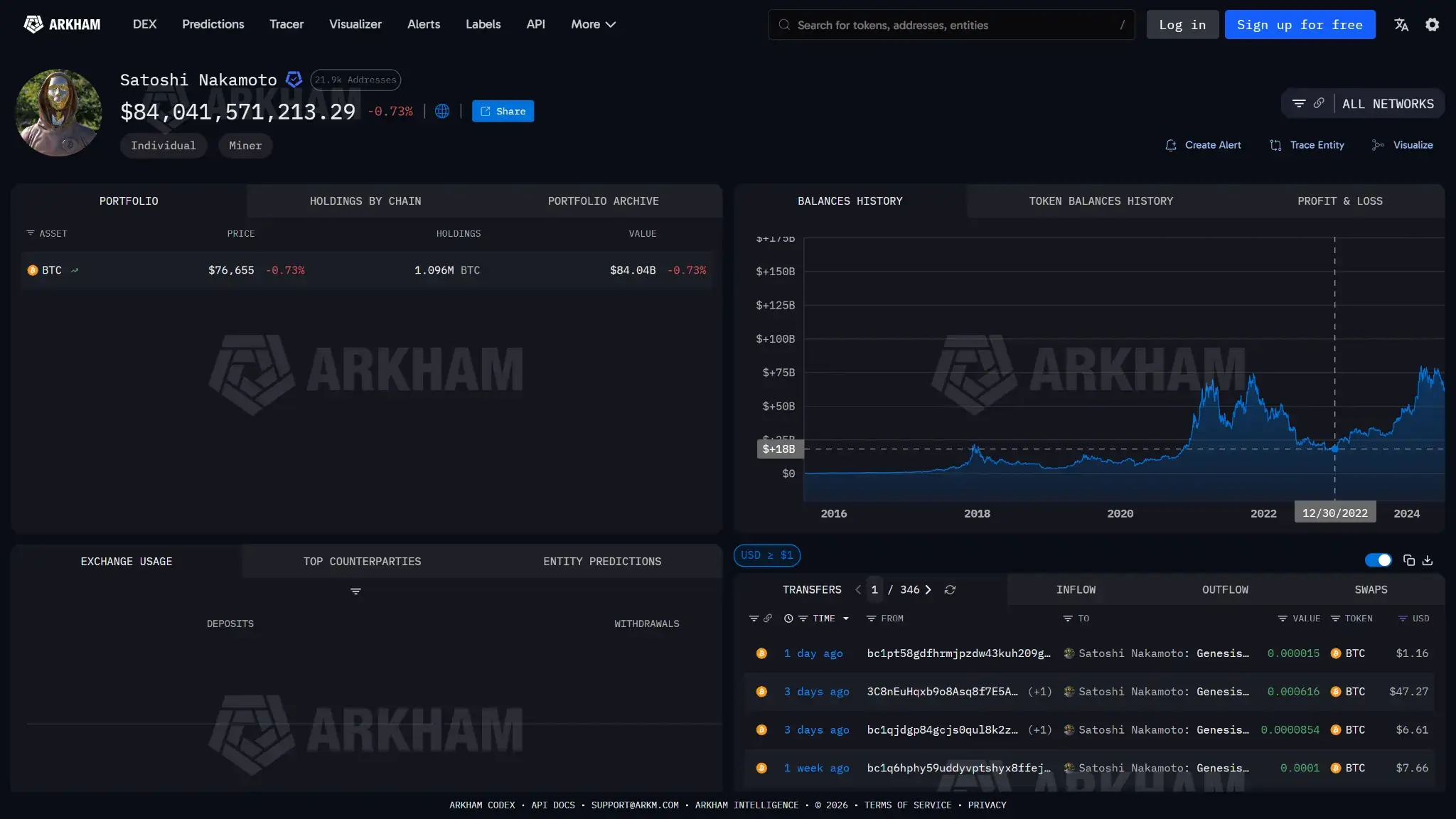
Satoshi Nakamoto is generally treated as the largest estimated individual Bitcoin holder, with about 1.096 million BTC attributed to early mining patterns in Arkham's holder analysis.
For institutions, the answer changes by category.
The same Arkham explorer lists Coinbase-linked wallets at about 960K BTC, BlackRock at about 819,000 BTC, and Binance at 641K BTC.
Fidelity Custody at about 445K BTC, and the U.S. government at about 328K BTC. These are dated snapshots, not permanent rankings. Any of them can shift after a single SEC filing, ETF redemption wave, or court-ordered seizure.
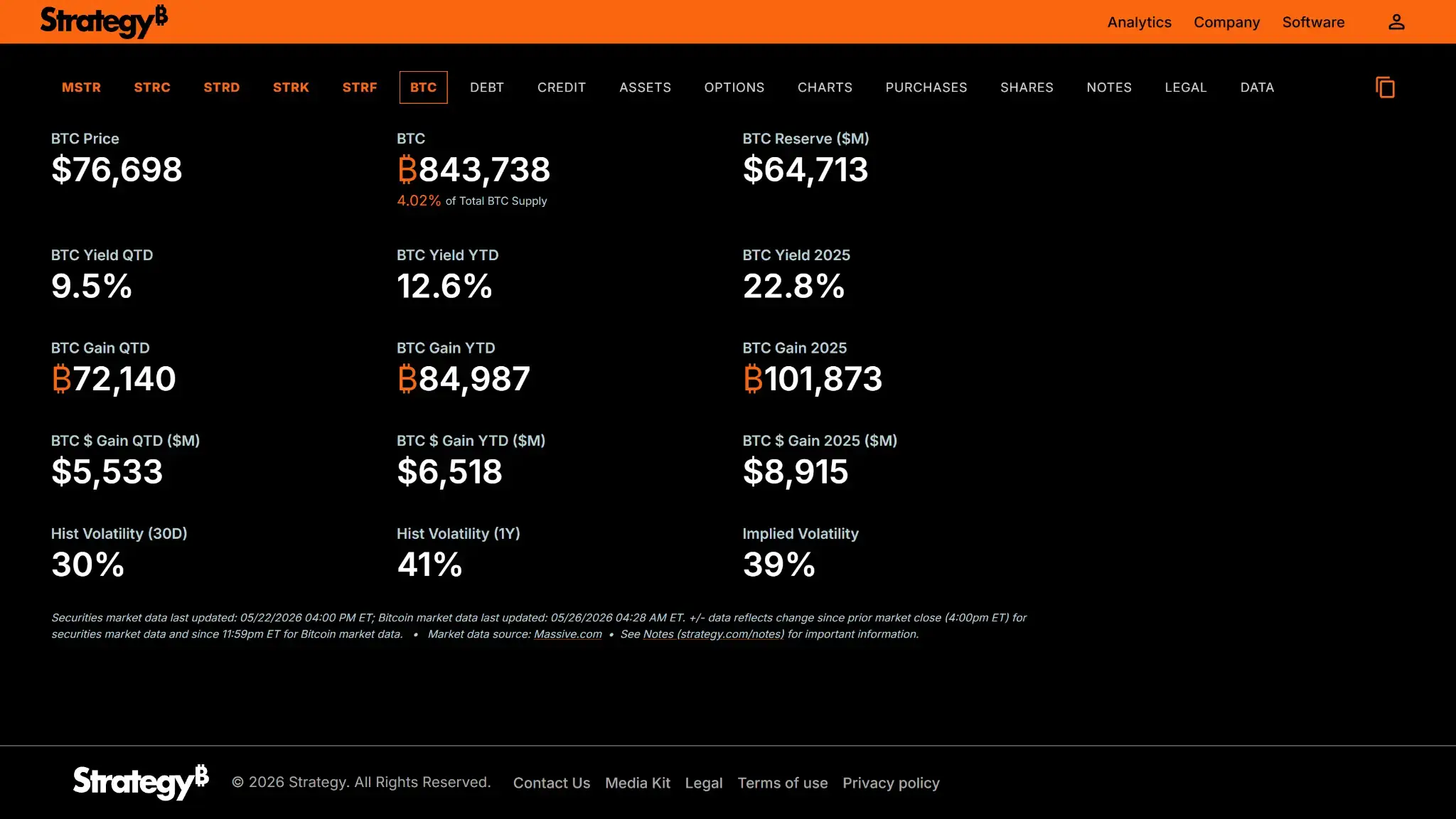
Strategy (prev. MicroStrategy) currently holds around about 845.2K BTC.
The most useful way to read these numbers is by category rather than as a single merged list. A holder ranking becomes misleading when it places an ETF trust, a corporate treasury, and an anonymous wallet in the same column without explaining what each one actually represents.
| Holder Category | Current Leader To Verify |
|---|---|
| Estimated individual holder | Satoshi Nakamoto, based on Patoshi Pattern attribution. |
| Exchange or custody entity | Coinbase-linked custody, followed by Binance in Arkham's May 2026 entity ranking. |
| ETF issuer exposure | BlackRock's IBIT, with holdings changing as creations and redemptions occur. |
| Public company treasury | Strategy, with 845,256 BTC listed in its June 9, 2026 SEC filing. |
| Government holder | The U.S. government, mostly tied to forfeited and seized BTC. |
| Single visible wallet | A Binance cold wallet, not one person's personal wallet. |
Understanding Bitcoin supply basics helps explain why one large holder can represent a meaningful share of the fixed 21 million BTC supply.
How to Read Bitcoin Holder Rankings
Bitcoin holder rankings are only useful when the label explains what is being counted. A wallet address, a labeled entity, a custodian, an ETF issuer, a public company, and a government reserve can all appear in the same list, even though each one means something different for who actually controls the coins.
The most common mistake beginners make is reading custody as ownership. Coinbase, Binance, Robinhood, Bitfinex, and Fidelity can control large wallets because they safeguard assets for customers, ETF trusts, or institutions. The economic claim still belongs to depositors, shareholders, ETF holders, or clients, not the platform itself.
That distinction changes how to interpret every rich list you'll encounter:
| Ranking Label | What It Really Means |
|---|---|
| Individual | A person or estimated person-linked cluster, often with uncertainty. |
| Wallet address | One address on-chain, which can belong to a custodian, exchange, company, or unknown entity. |
| Entity cluster | A data provider's grouping of addresses believed to share control. |
| Exchange | A platform-controlled reserve that may include customer deposits. |
| Custodian | A safeguarding account that can hold assets for funds, companies, or clients. |
| ETF issuer | A trust or product structure that gives investors share exposure to Bitcoin. |
| Public company | A treasury position usually disclosed through filings and investor updates. |
| Government | BTC tied to seizures, forfeiture, reserves, mining, or policy programs. |
| Unknown address | A wallet with no public owner label, not proof of one hidden billionaire. |
Some labels describe private-key control, some describe legal or economic claims, and some are just incomplete guesses. When the same BTC appears under a wallet, custodian, or ETF label, the source should be clear about which claim it is measuring. Current rankings can disagree with each other precisely because on-chain labels, SEC filings, ETF disclosures, and treasury trackers are answering different questions. A strong list names the source, the date, and the verification method.
Largest Bitcoin Holders by Category
The figures below rely on Arkham's May 2026 holder analysis unless a separate filing is noted. They are dated snapshots because ETF balances, exchange wallets, and treasury holdings can change quickly. One blended top-10 list is harder to read than a category-by-category breakdown, because the categories reflect fundamentally different relationships to the coins.
| Category | Current Best Answer |
|---|---|
| Estimated individual | Satoshi Nakamoto, about 1.096 million BTC attributed to the Patoshi Pattern. |
| Exchange or custody entity | Coinbase-linked custody, about 960K BTC in Arkham's May 2026 entity snapshot. |
| Public company | Strategy, 845,256 BTC as of June 9, 2026 in its SEC filing. |
| ETF issuer exposure | BlackRock, about 819K BTC in Arkham's May 2026 snapshot. |
| Government | U.S. government, about 328K BTC in Arkham's verified on-chain view. |
| Private company | Tether in Arkham's verified on-chain list, while Block.one appears larger in some tracker lists but is not verified the same way. |
| Unknown wallet | Large unlabeled addresses, which should be described as wallets rather than named holders. |
Private-firm rankings need extra caution because Tether, Block.one, and SpaceX often appear with different source quality across trackers. Self-reported or tracker-reported numbers should not be presented as equal to on-chain labels or SEC filings.
Satoshi Nakamoto and Dormant Early Bitcoin
Satoshi Nakamoto is the standard answer for the largest estimated individual Bitcoin holder, with about 1.096 million BTC attributed through the Patoshi Pattern, a mining-pattern analysis tied to early Bitcoin blocks. That figure is an estimate based on on-chain evidence, not a legally confirmed ownership record. The identity behind the name remains unconfirmed.
For a beginner, the most important facts to hold separately are these:
- The coins are attributed through mining patterns, not assigned to a verified person.
- The wallets have been dormant for over a decade.
- Dormancy reduces day-to-day sell pressure but does not prove the coins are permanently lost.
- Any movement from credible Satoshi-linked wallets would be noticed by the market immediately.
Dormant coins behave differently from active treasury holdings. Strategy files a purchase report. An ETF reports creations and redemptions. An exchange can move cold storage between accounts. Satoshi-linked coins sit outside all of that because no one can confirm whether they are lost, inaccessible, or simply untouched. That uncertainty makes them a latent overhang on the market: not an active threat, but one traders keep in the back of their minds.
Exchanges, ETFs, and Custodians Do Not All Mean the Same Thing
Exchanges, ETFs, and custodians appear at the top of Bitcoin holder rankings because they hold large pools of BTC on behalf of others, not because any one company necessarily owns every coin in those wallets. This is the distinction that makes Coinbase, Binance, Robinhood, Bitfinex, BlackRock, and Fidelity look similar in a list while representing very different relationships to the underlying coins.
Exchange cold wallets routinely include customer deposits. A Binance cold wallet can rank as one of the largest visible Bitcoin addresses without any Binance executive personally owning that BTC. A Coinbase-linked custody stack can include assets safeguarded for institutions, ETF products, and individual platform customers all at once.
ETF structures add another layer on top of that. BlackRock's iShares Bitcoin Trust ETF is built so that the trust holds Bitcoin through its custody setup, while investors own ETF shares that provide exposure to Bitcoin's price. BlackRock is the sponsor and its name appears in rankings, but the economic exposure belongs to shareholders in the product.
| Large Visible BTC Stack | Who Has Economic Exposure |
|---|---|
| Exchange cold wallet | Mostly customers and platform clients, plus any operating reserves. |
| Coinbase-linked custody | ETF trusts, institutions, and customers whose assets are safeguarded there. |
| BlackRock IBIT | Shareholders in the trust, not BlackRock as a simple balance-sheet owner. |
| Fidelity Custody | Clients, funds, or companies using Fidelity as custodian. |
| Robinhood or Bitfinex wallet | Platform customers and operational balances depending on wallet purpose. |
The same custody distinction applies when comparing crypto exchange custody with Bitcoin ETF companies. An exchange balance is an account claim on a platform. An ETF share is a securities wrapper tied to a trust's Bitcoin exposure. Those are different products with different risks, even if both show up in the same “top holders” table.
Large custodial stacks can still affect market structure. Redemptions, operational moves, or a confidence shock can push many coins to market at once. Custody concentration raises questions about trust and operational risk, but it is a different concern from one person or company hoarding Bitcoin as a personal asset.
Strategy, Public Companies, and Bitcoin Treasury Firms
Strategy is the largest public-company Bitcoin holder by a wide margin, with 845,256 BTC in reserves as of June 9, 2026. The company was formerly known as MicroStrategy, and its approach of using common stock, preferred stock, and debt instruments to fund Bitcoin purchases became the reference model for corporate treasury adoption.
Public-company holder rankings should separate three distinct groups, because they acquire and hold Bitcoin for different reasons:
- Treasury companies that buy BTC as a core reserve strategy, treating it like a balance-sheet asset.
- Miners that retain some of their mined BTC instead of selling all production immediately.
- Operating companies that hold smaller BTC balances alongside their main business activities.
That distinction is why digital asset treasury firms and Bitcoin mining companies both appear in holder discussions but should not be treated as the same type of holder. Treasury firms acquire BTC with financing or cash reserves. Miners can build balances from production that costs them energy and hardware, not capital raises.
Governments, Seized Bitcoin, and National Reserves
Government Bitcoin holdings are mostly a story about seizures, forfeitures, and court orders, not countries buying BTC the way a corporation builds a treasury. The U.S. government leads verified government rankings because large wallets are directly tied to forfeiture cases.
The March 6, 2025 White House order established a Strategic Bitcoin Reserve funded with finally forfeited BTC held by the U.S. Treasury. It also directed budget-neutral acquisition strategies and restricted ordinary disposal except through specific lawful cases.
Country rankings require stricter source discipline than corporate rankings, because government holdings can shift through court decisions, policy changes, or wallet relabeling without much public notice:
- The United States leads verified government holdings in Arkham's May 2026 data.
- The United Kingdom appears through seizure-linked BTC.
- El Salvador holds a strategic reserve, with Arkham reporting 7,594 BTC data as of May, 2026.
- Bhutan is linked to mining-related holdings through Druk Holding and Investments.
- China is listed in some historical sources based on PlusToken forfeiture data, but current holdings are unverified.
So, Which Country Has The Most Bitcoin?
The United States leads among verifiably government-controlled BTC. Historical seizure claims from other countries may have been sold, transferred, or moved, which makes them unreliable for current rankings. Country lists built from screenshots or stale tracker rows should be treated with skepticism.
Largest Bitcoin Wallets and Unknown Whales
The largest Bitcoin wallet is not the same as the largest Bitcoin owner. Arkham's May 2026 data showed a Binance cold wallet holding ±250,000 BTC as the largest visible individual address.
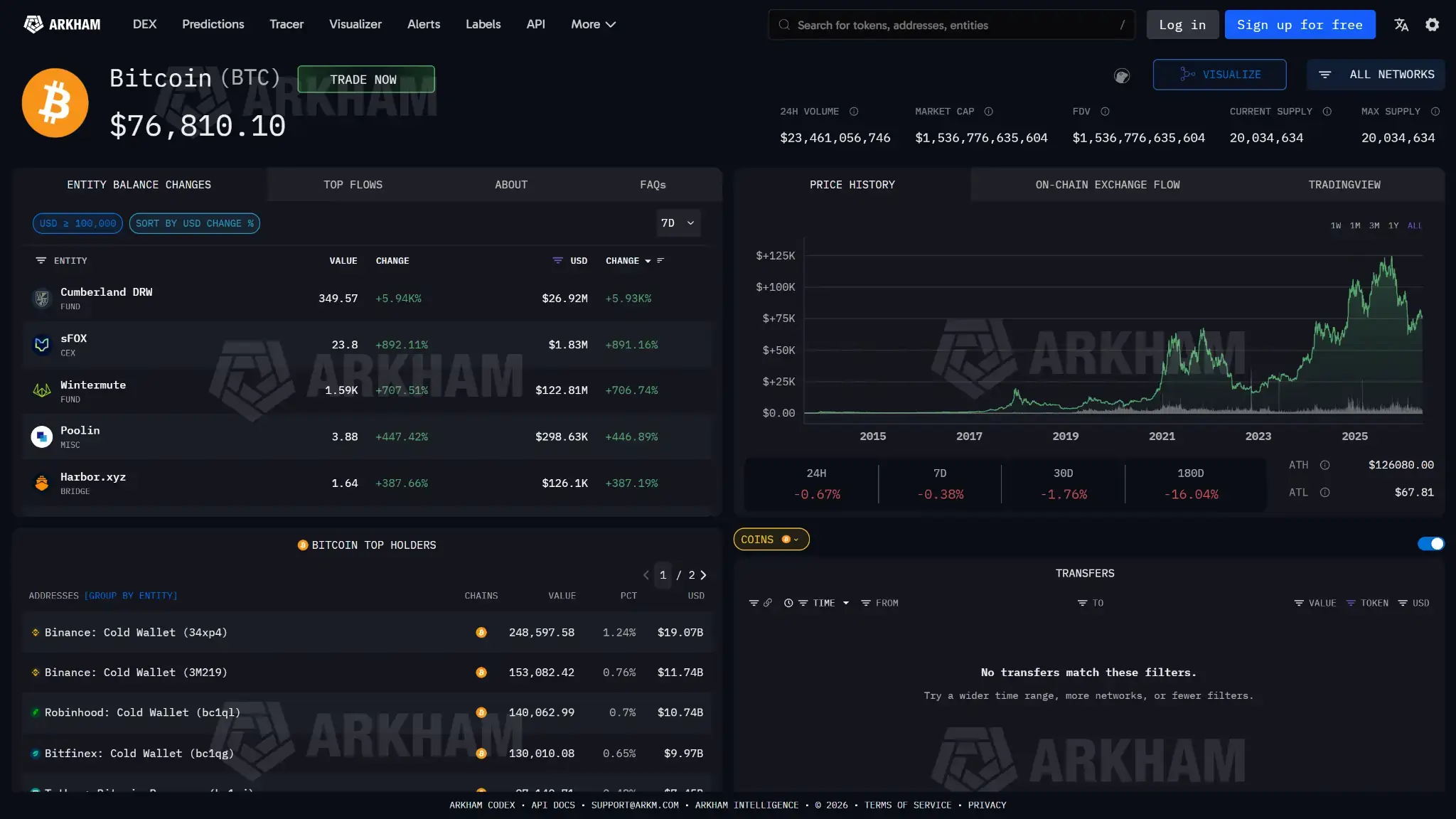
That size reflects platform infrastructure, not a personal fortune. Exchanges split assets across hot wallets, warm wallets, cold wallets, and custody accounts, so a single address can appear enormous simply because it is part of a larger operational system.
Unknown whales, meaning large wallets with no clear public attribution, require even more caution than labeled exchange wallets:
- A single address can belong to a custodian, exchange, fund, or a long-term individual holder from Bitcoin's early years.
- An inactive wallet can be lost, deliberately dormant, or inaccessible due to lost keys.
- Entity clustering can improve attribution, but it still depends on probabilistic evidence.
- A large deposit or withdrawal often turns out to be an internal custody move with no change in ultimate ownership.
Unknown addresses are still worth watching for market context. If an old wallet holding 50,000 BTC wakes up after years of inactivity, traders and analysts will notice and speculate. Movement alone does not confirm a sale or reveal the owner. The cleanest way to describe these addresses is “largest visible wallet” or “largest unattributed address,” rather than attaching a named holder without solid attribution.
Does Bitcoin Ownership Concentration Matter?
Bitcoin ownership concentration matters for liquidity, custody risk, market confidence, and sell-pressure narratives. It does not allow any holder to rewrite Bitcoin's monetary rules, change the 21 million supply cap, or override network consensus simply by owning coins.
The asset can be economically concentrated while the protocol remains decentralized. That is an important distinction for beginners to hold onto. Large holders can influence market supply if they sell, borrow, pledge collateral, or trigger redemptions. They cannot force network nodes to accept invalid blocks or change Bitcoin's rules without broad network agreement.
The practical concerns are narrower than the versions you see on social media:
| Concern | Plain Answer |
|---|---|
| Satoshi sells | A credible move would shock the market, but dormant attribution does not prove active sell pressure. |
| ETF outflows | Redemptions can create selling pressure through trust mechanics and authorized participants. |
| Exchange wallets | Custody concentration raises trust and operational-risk questions for users. |
| Strategy financing | A highly visible corporate treasury can affect sentiment if funding conditions tighten. |
| Government seizures | Court or policy decisions can move supply into auctions, reserves, or victim restitution. |
| Unknown whales | Large unlabeled wallets can move markets, but labels are often incomplete. |
Proof-of-reserves expectations are part of this conversation. Users want exchanges and custodians to show that platform liabilities are backed by real assets, but reserve attestations still have limits around timing, liability coverage, and wallet scope.
Ownership concentration is a market-structure risk, not evidence that Bitcoin itself is centrally governed. Custody failures, ETF flows, and corporate leverage are separate risks from protocol capture, and beginners are better served by keeping those categories distinct.
How Holder Rankings Change Over Time
Bitcoin holder rankings shift when coins move, disclosures arrive, ETFs create or redeem shares, miners sell or retain production, governments auction seized assets, or custodians consolidate wallets. Dollar values change faster still because BTC price moves constantly and independently of who holds the coins.
BTC counts and USD values should always be dated separately. A holder can own the same number of coins for months while the dollar value swings by billions. For current price context, live Bitcoin market data is more reliable than any static holder article.
The main events that drive ranking changes are fairly predictable once you know what to watch:
- ETF inflows and outflows change trust holdings as shares are created or redeemed.
- Public companies can buy or sell after financing events, earnings disclosures, or strategic decisions.
- Miners retain coins or sell to fund operations, especially around the Bitcoin halving cycle.
- Governments seize, return, auction, or officially designate BTC based on court orders and policy changes.
- Exchanges consolidate wallets or migrate custody for security or operational reasons.
- Wallet labels change as on-chain analytics firms gather more attribution evidence.
New issuance also slows over time through Bitcoin's halving schedule. That does not freeze holder rankings, but it makes large purchases more visible relative to the shrinking stream of newly mined supply. Mining-related balances should not be confused with pool control: mining pool companies coordinate hashpower and payouts, while long-term BTC ownership depends on who retains the coins after rewards are distributed.
If you wanna learn more about the halving cycles and how they impact miners and Bitcoin prices, check this comprehensive guide to Bitcoin halving!
How To Check Current Bitcoin Holder Data
No single dashboard answers every holder question. The best approach is to match the holder type to the right verification source, then check the date on the data before drawing conclusions.
A practical verification pass uses several source types in combination:
- On-chain entity tools like Arkham for wallet labels, address clusters, and entity attribution.
- SEC EDGAR and company investor-relations pages for public company treasury positions.
- ETF sponsor pages and fund prospectuses for trust structure and current holdings.
- Treasury trackers like CoinTreasuries for broad public-company comparisons.
- Government orders, court records, or verified on-chain labels for state-controlled wallets.
The fastest check is to ask what the number claims to measure. For a wallet, use an on-chain label tool. For a corporate treasury, look for a filed disclosure or company update. For an ETF, use the sponsor's holdings page and fund documents. For a government, look for a verified order or court record.
FAQs
Who has the most Bitcoin in the world?
Satoshi Nakamoto is generally treated as the largest estimated individual Bitcoin holder, with about 1.096 million BTC attributed to early mining patterns. Among visible institutions and custodians, Coinbase-linked custody, Strategy, BlackRock, Binance, Fidelity Custody, and the U.S. government lead different categories.
Which company owns the most Bitcoin?
Strategy is the largest public-company Bitcoin holder. It holds 845,256 BTC as of June 9, 2026.
Which country has the most Bitcoin?
The United States is the largest verified government Bitcoin holder in Arkham’s May 2026 on-chain ranking, with about 328K BTC tied mainly to forfeited and seized assets.
Does BlackRock own Bitcoin in IBIT?
IBIT holds Bitcoin for the trust, while investors own ETF shares that provide exposure to Bitcoin’s price. BlackRock is the sponsor, so its name appears in rankings, but the economic exposure belongs to shareholders in the product.
What is the largest Bitcoin wallet?
Arkham’s May 2026 list showed a Binance cold wallet with almost ±250,000 BTC as the largest visible single Bitcoin address. That does not mean one person owns the wallet because exchange cold wallets usually custody customer and platform assets.
What happens if Satoshi moves Bitcoin?
A credible movement from Satoshi-linked coins would likely create market shock because the coins have been dormant for years. Movement alone would not prove a sale, reveal Satoshi’s identity, or change Bitcoin’s consensus rules.
